Assessing the $1.8 Trillion Federal Deficit on the U.S. Dollar’s Reserve Currency Status

Photo by Vladimir Solomianyi on Unsplash
After racking up another $1.8 trillion budget deficit for fiscal year 2024, one has to wonder: where are the bond vigilantes? The United States has long enjoyed the privilege of holding the world’s reserve currency, a status underpinned significantly by the size and liquidity of the U.S. Treasury market. It’s a central reason why U.S. Treasurys are the preferred reserve holding vehicle for central banks and governments worldwide. Below is a chart of government security trading volume ratios between the U.S., Germany and Japan.
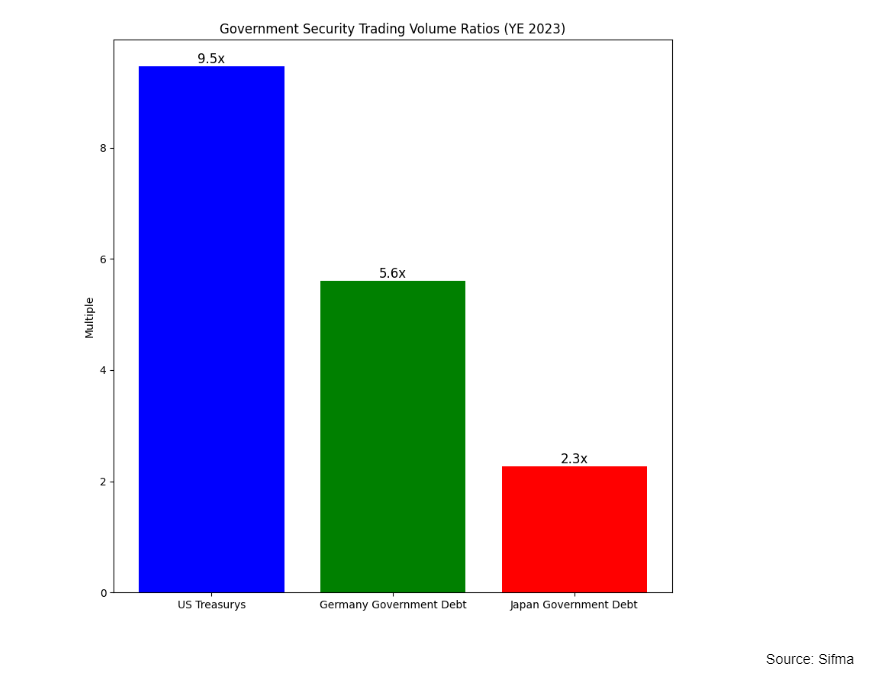
This article explores the implications of our profligate fiscal policy and corresponding accommodative monetary policy on the eroding confidence in the U.S. dollar. In particular, we look at three indicators suggesting a weakening of the dollar’s dominance: unsustainable fiscal and monetary policies, declining demand for Treasury debt in auctions, and warning signs in gold.
Unsustainable Fiscal and Monetary Policies
The US recently added over $200 billion to the federal debt in one single day earlier this month. The dollar’s position as the global reserve currency could increasingly become under strain due to unsustainable fiscal and monetary policies. The runaway spending in the US has far outpaced our economy’s productive capacity as evidenced by the chart below:
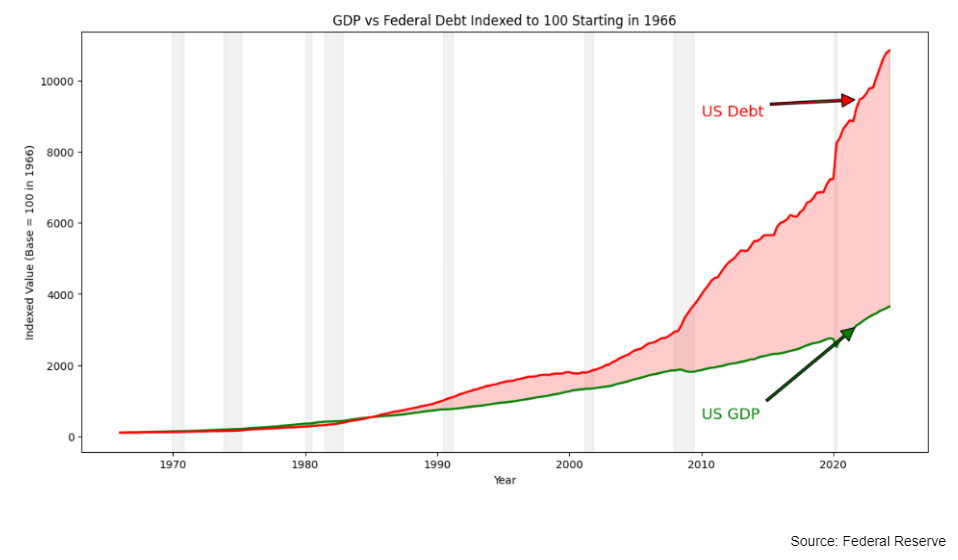
A system that relies on exponentially increasing levels of debt for each incremental unit of productivity eventually becomes so unstable that it simply collapses under the weight of its own leverage. This increasing debt burden is driven by multi-trillion-dollar annual deficits.
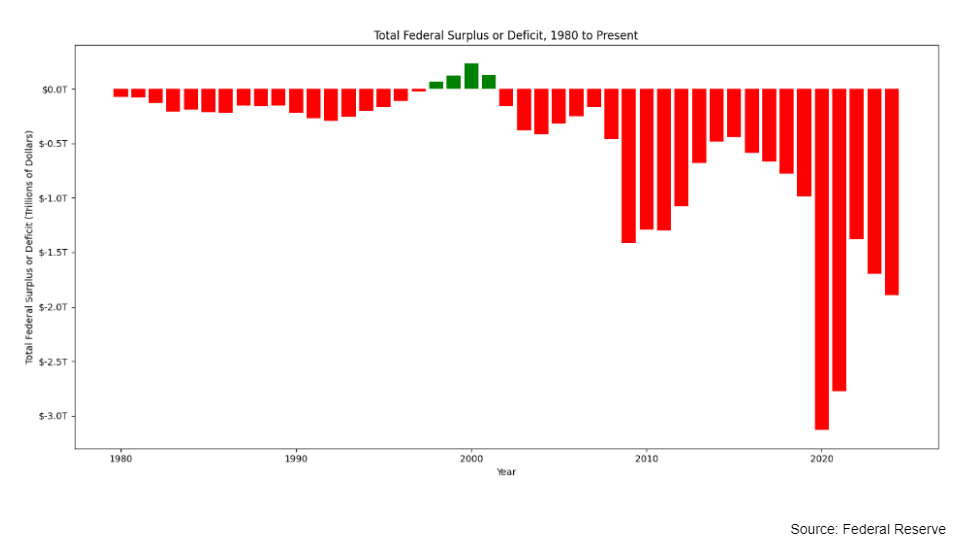
Of course, these deficits must be financed. The result is increasing amounts of US Treasury securities issued (now at over $28 trillion).
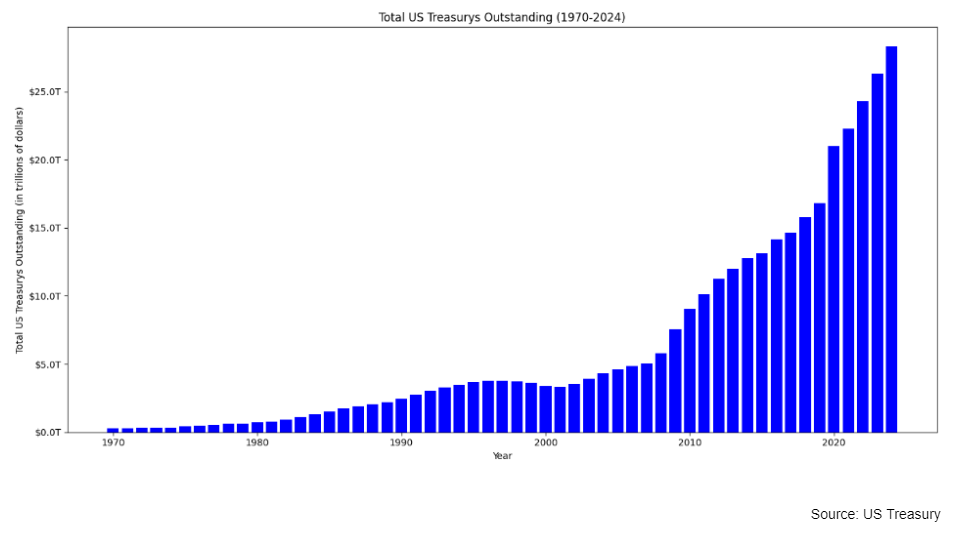
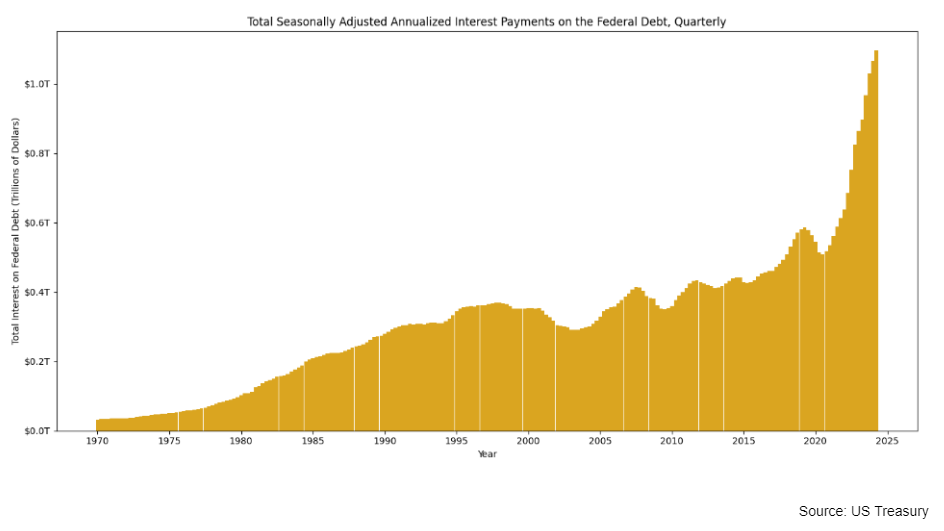
As a result of these deficits, federal borrowing costs have remained elevated due to the necessity of issuing more Treasurys to cover the gap between government spending and revenue. The Treasury Department reported that for the first time, over $1 trillion was spent on interest payments for the national debt, highlighting the unsustainable trajectory of federal borrowing.
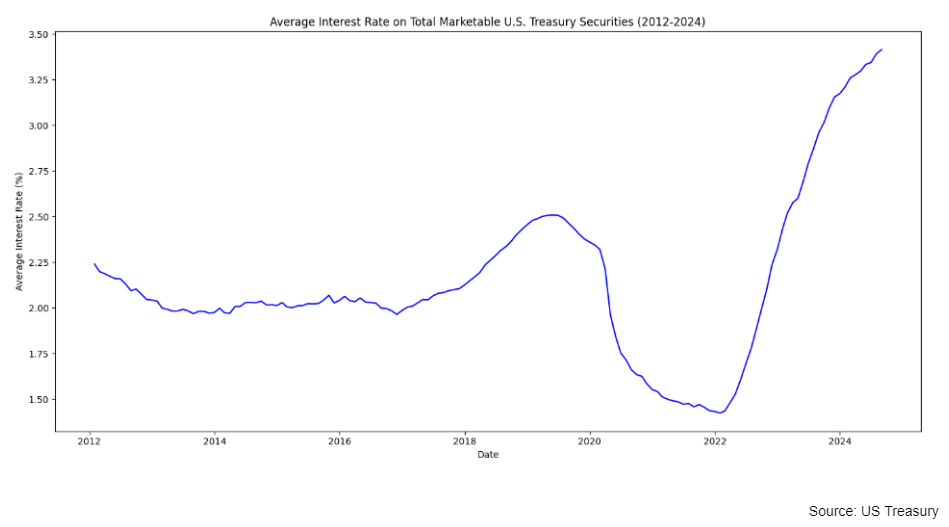
Government and central bank experts assure us that Modern Monetary Theory (MMT) works. MMT posits that governments can sustain higher deficits by leveraging their ability to issue currency. This approach is precarious as evidenced by post-World War II Britain’s experiment with similar policies that led to the collapse of the pound’s reserve currency status. As the U.S. continues to spend and borrow at unprecedented rates without corresponding economic growth, investor confidence wanes. This erosion of confidence compels creditors to demand higher premiums for lending, further inflating interest expenses and deepening the fiscal crisis.
Declining Demand for Treasury Debt in Auctions
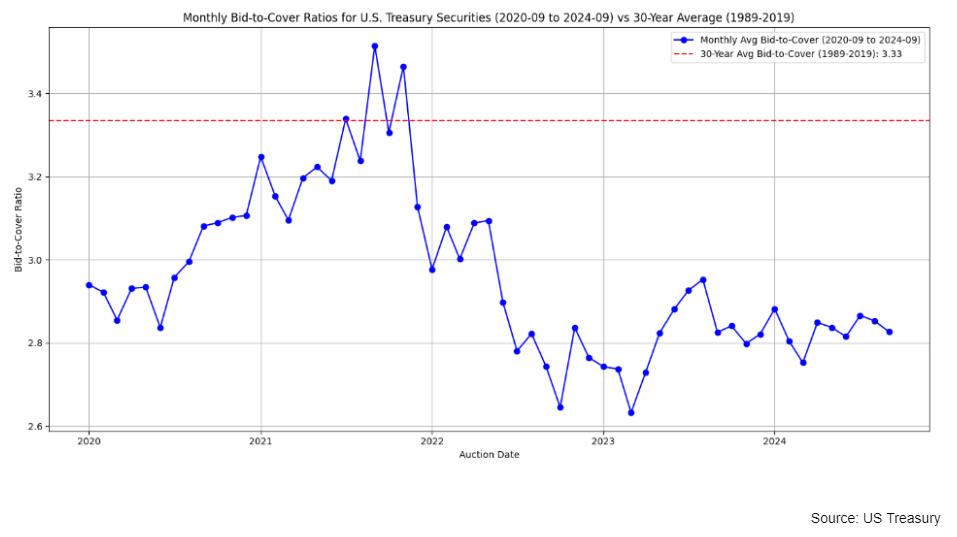
Another alarming sign in the dollar’s dominance is coming from the US Treasury auction market. Recent auctions have shown average bid-to-cover ratios for Bill, Note and Bond auctions vastly below the historical, pre-pandemic 30 year average bid-to-cover ratio.
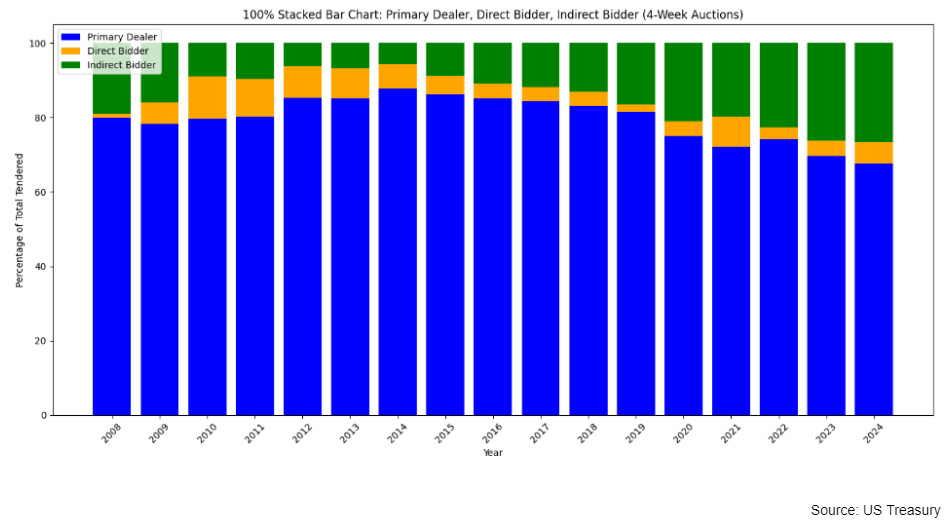
Similarly, US Treasury auctions in recent years have seen a clear trend toward larger Indirect Bidder allocations. These allocations represent customers placing competitive bids through a direct submitter, including Foreign and International Monetary Authorities (via bids placed through the Federal Reserve Bank of New York). The pullback in primary dealer activity reflects a broader hesitancy to commit to US government debt, raising concerns about the dollar’s attractiveness as a reserve currency.
Warning Signs in Gold
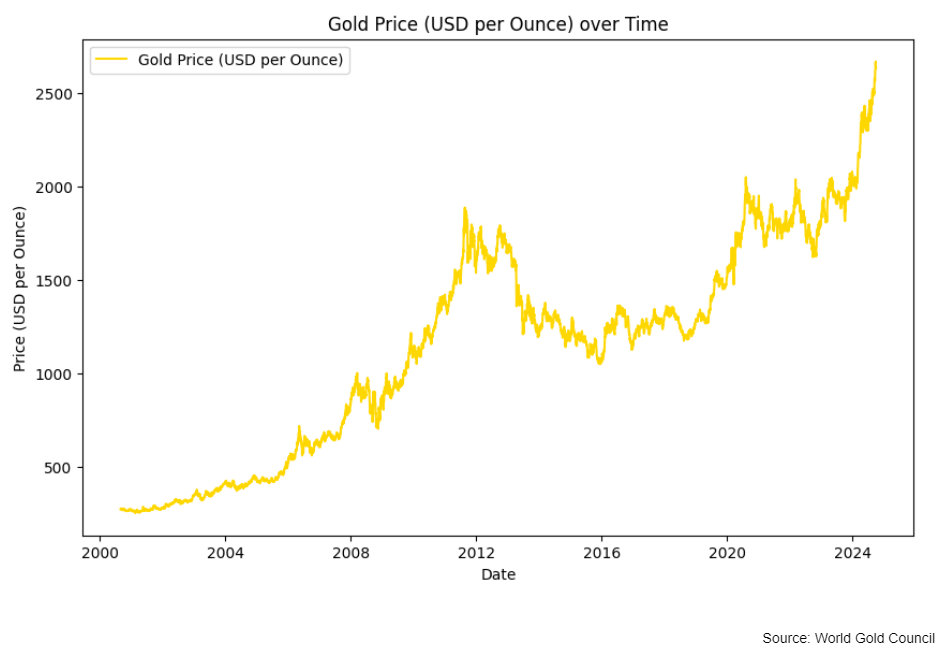
If markets make opinions, they are giving us a very clear sign in the recent rally of the price of gold.
Taking a deeper look into the fundamentals, we can see noticeable shifts in global reserve preferences, as reflected in the sharp rise in central bank holdings of gold. A generation ago, central banks were predominantly selling gold, with the coordinated clearance sales of the late 1990s contributing to the modern-day low in gold prices. However, the 2024 Central Bank Gold Reserves Survey reveals a significant turnaround: 29% of the World Gold Council’s 70 respondents plan to add to their gold holdings within the next 12 months - the highest percentage since the survey began in 2018.
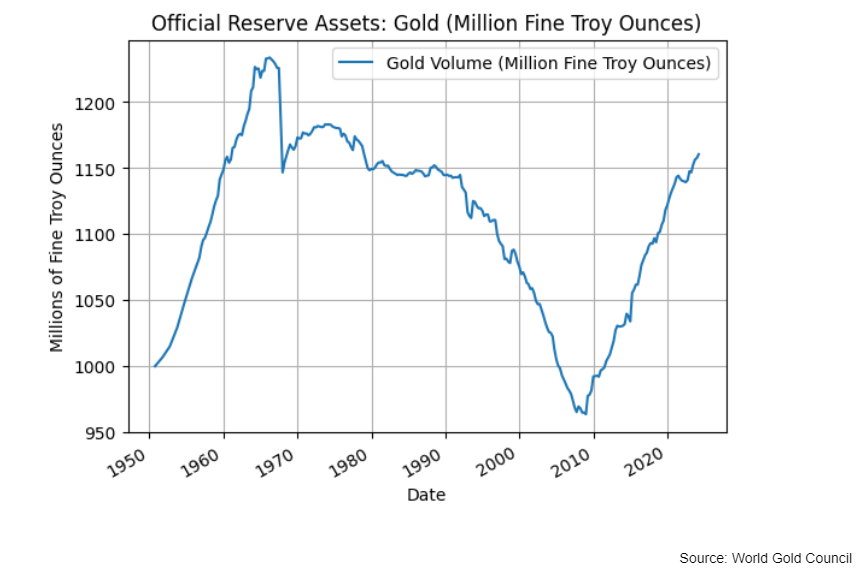
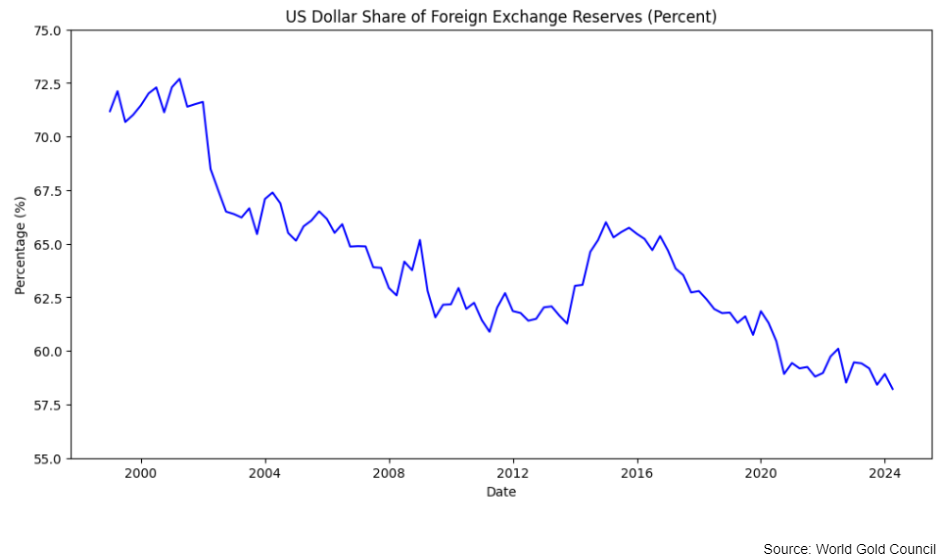
Gold serves as a critical component of central bank reserves due to its safety, liquidity, and return characteristics. Historically, gold has been a hedge against economic uncertainty and currency devaluation. The significant increase in gold holdings by central banks indicates a growing preference for tangible assets over fiat currencies, reflecting diminished confidence in the dollar’s long-term stability as the world’s reserve currency.
Conclusion
If investors continue to step back from purchasing Treasurys, that would be a cause for concern for the US Dollar’s reserve currency status. Compounding this issue is the burgeoning federal budget deficit and runaway spending, which, at some point, creditors may finally say enough.
While overtaking the dollar in reserve status would require substantial effort and time, the current trajectory of increased gold holdings by central banks is a clear indicator of underlying concerns about the dollar’s future role in the global economy.