SAM
Semi-Autonomous Manuscripts: working papers and strategy notes, each with a companion essay, figures, and the PDF.
Paid in Time: Unemployment Is Not Rising Much, It Is Lasting Longer
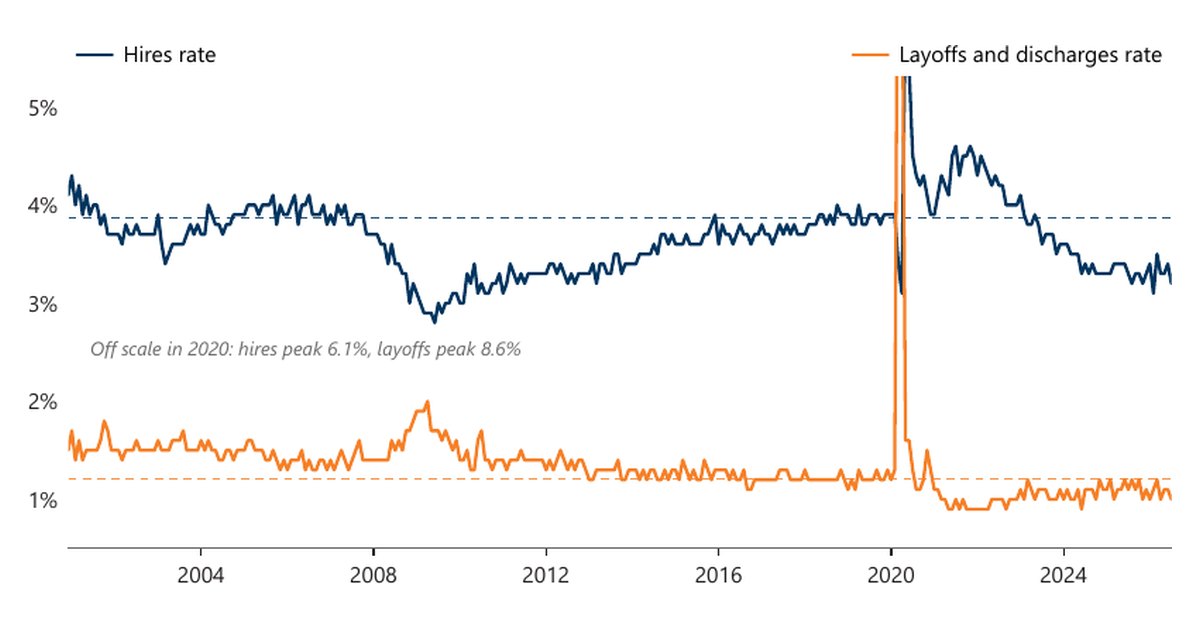
Hiring has fallen well below its pre-pandemic rate and layoffs have not risen to meet it, so the unemployment rate has moved only 0.46 points since 2019. The monthly flows show where the adjustment went: entries into unemployment are close to unchanged while exits to work have fallen, so spells last longer. Most of the small rise in the rate is people who have now been out of work for six months or more.
Is It AI or Is It the Fed? Generative AI Exposure, Monetary Tightening and the Post-2022 White-Collar Slowdown
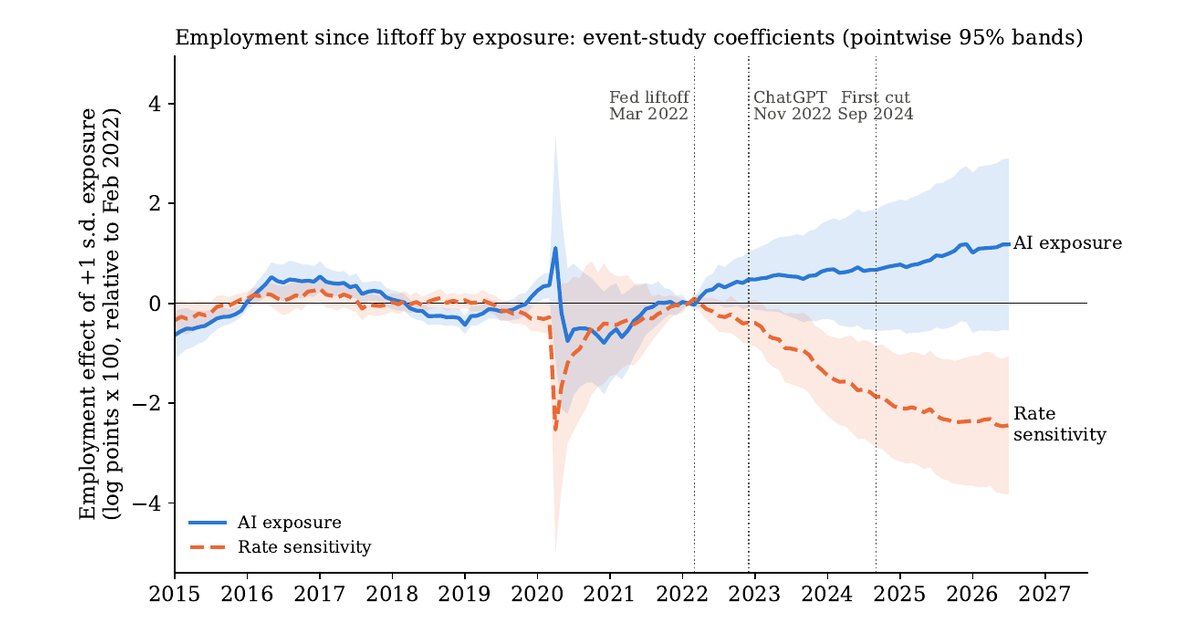
Since late 2022, employment in software, information, finance and professional services has stalled and entry-level hiring has weakened, a pattern widely attributed to generative AI. ChatGPT, however, arrived eight months into the fastest monetary tightening in four decades and at the end of a pandemic hiring overshoot. Across 205 detailed industries, this paper asks how much of the slowdown is the technology and how much is the Federal Reserve and the pandemic hangover.
The Golden Canary: Asymmetric Gold Price Responses to Labor Market Shocks Across Monetary Regimes
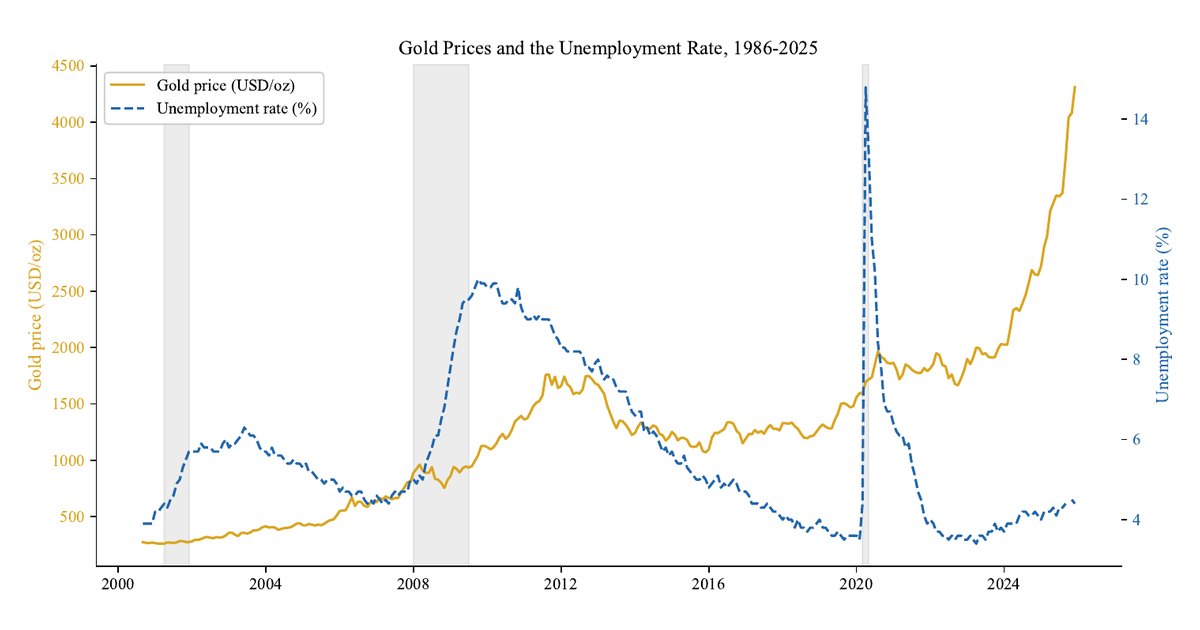
Does gold respond symmetrically to good and bad labor market news? Local projections on monthly unemployment surprises from 2000 to 2025 reveal a pronounced asymmetry and a structural shift in the gold-unemployment relationship that coincides with the adoption of quantitative easing.
The Broadening Premium: Sectoral Inflation Synchronization and the Persistence of Aggregate Price Shocks
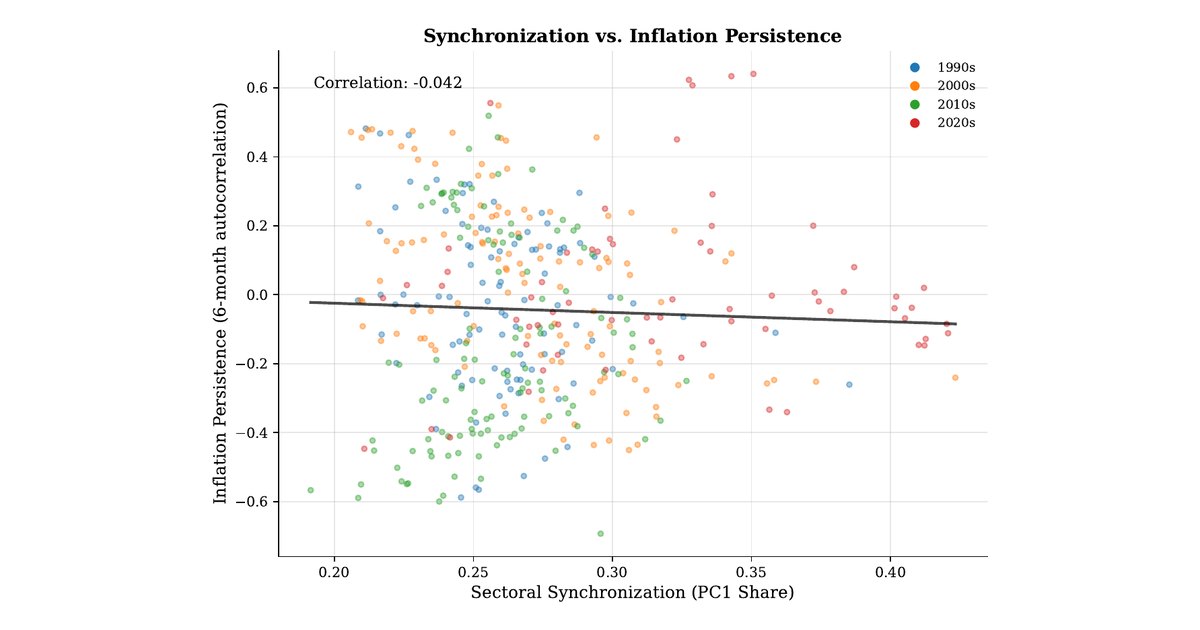
When does inflation become persistent? Using monthly CPI data for 13 expenditure categories from 1990 to 2024, we construct a real-time measure of sectoral inflation synchronization and show that broad-based inflation responds differently to monetary policy than narrow price spikes.
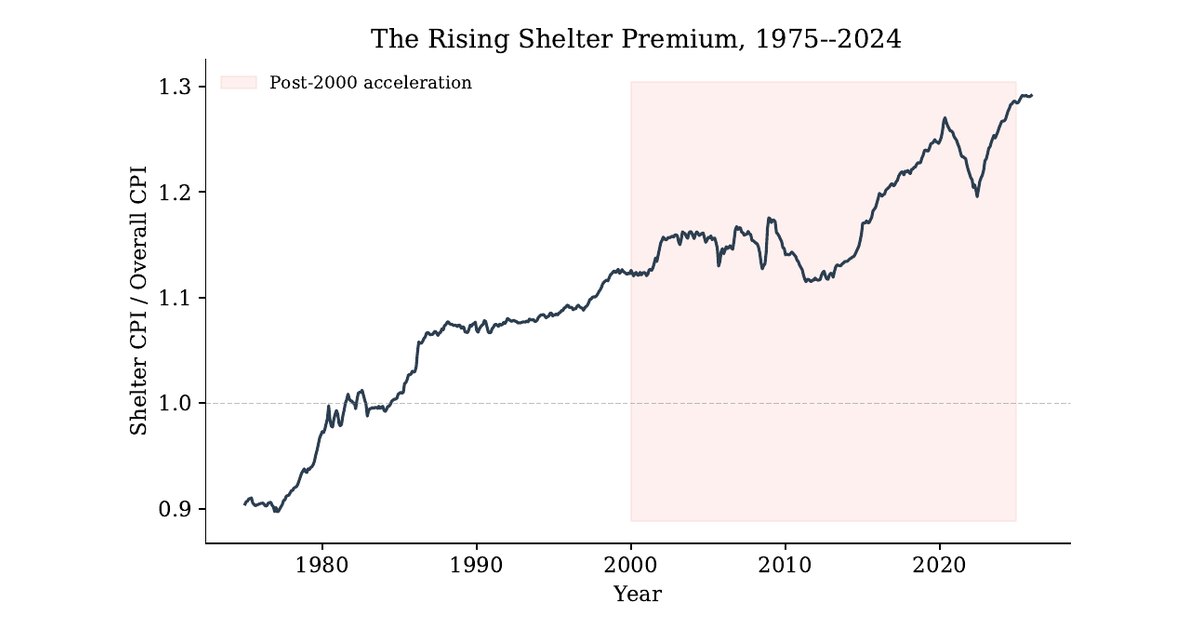
The Shelter Wedge: How Housing Supply Constraints Amplify the Great Decompression
Since 1970, shelter costs in the United States have grown 44% faster than overall prices. We introduce the shelter wedge, the mechanism by which housing supply constraints translate nominal income divergence into real consumption inequality, and test whether it is amplified in supply-constrained markets.