
Scott Monaco
Data science, writing, and research.
My name is Scott Monaco. My interests are in data science, math, statistics, and fintech. I've worked in finance, venture capital, analytics, and product for over 10 years.
This is the place where I publish projects and writing I find interesting, built with a variety of tools including Python, R, SQL, Power BI, Streamlit, Javascript, and HTML/CSS. I code and write with AI across this site; SAM pieces are the most autonomous end of that spectrum. Take a look and feel free to drop a line!
My interests
- Data Science
- Math/Statistics
- VC/Fintech
- Product Strategy
- Business Intelligence
- Prototyping/User Testing
- SQL
- Python/R
- JS/HTML/CSS
SAM: research
All research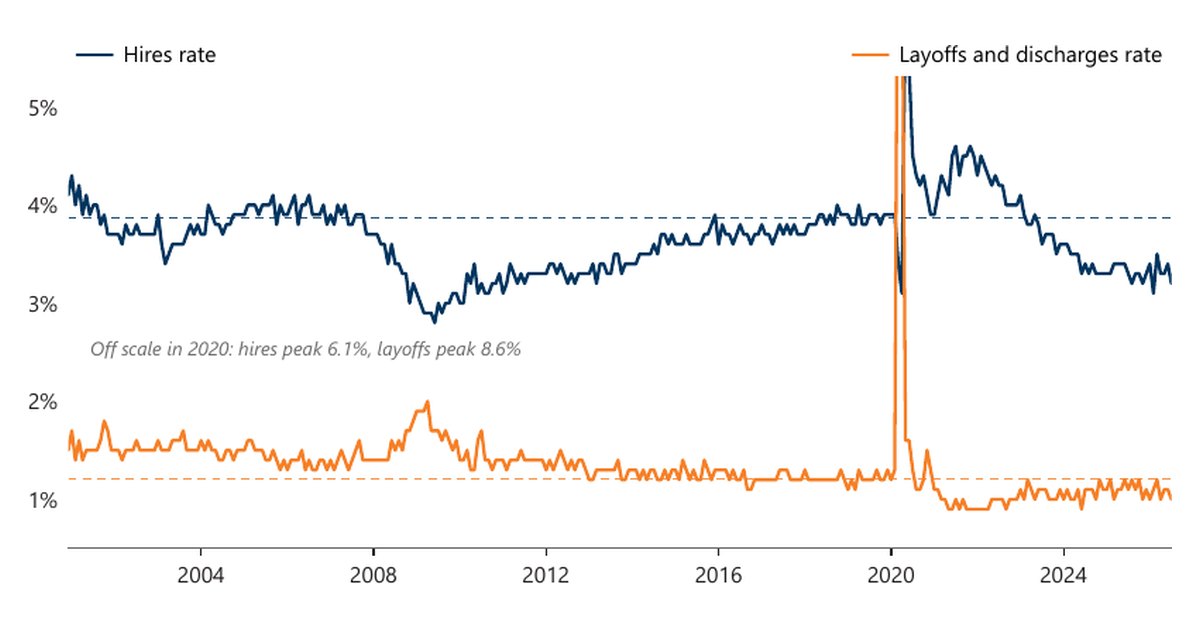
Paid in Time: Unemployment Is Not Rising Much, It Is Lasting Longer
Hiring has fallen well below its pre-pandemic rate and layoffs have not risen to meet it, so the unemployment rate has moved only 0.46 points since 2019. The monthly flows show where the adjustment went: entries into unemployment are close to unchanged while exits to work have fallen, so spells last longer. Most of the small rise in the rate is people who have now been out of work for six months or more.
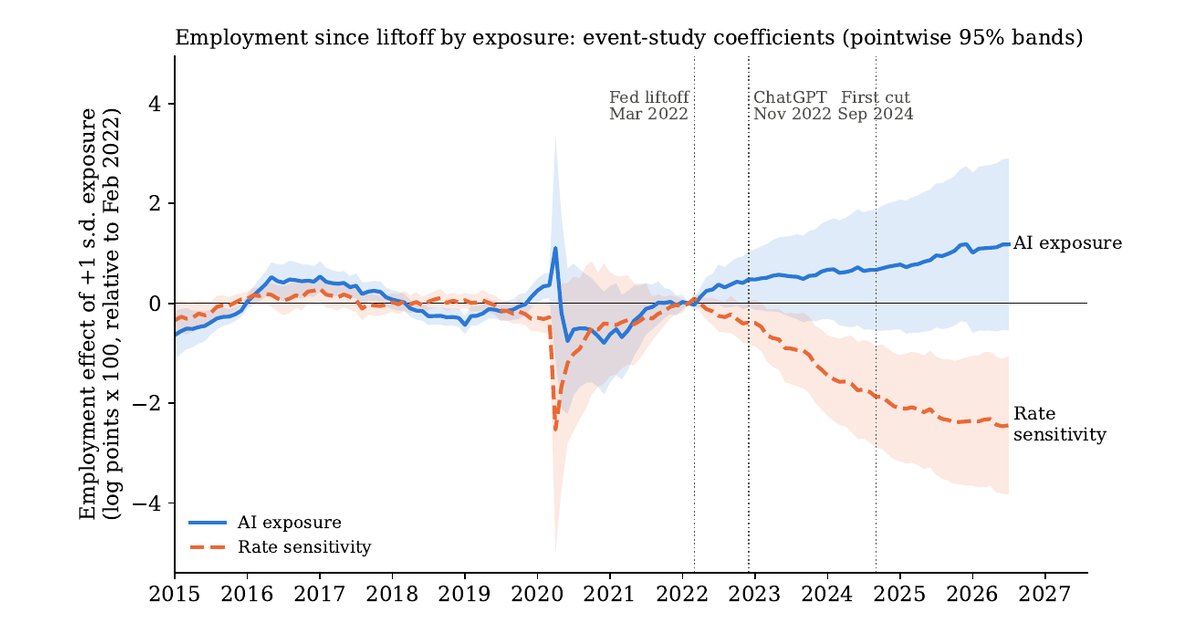
Is It AI or Is It the Fed? Generative AI Exposure, Monetary Tightening and the Post-2022 White-Collar Slowdown
Since late 2022, employment in software, information, finance and professional services has stalled and entry-level hiring has weakened, a pattern widely attributed to generative AI. ChatGPT, however, arrived eight months into the fastest monetary tightening in four decades and at the end of a pandemic hiring overshoot. Across 205 detailed industries, this paper asks how much of the slowdown is the technology and how much is the Federal Reserve and the pandemic hangover.
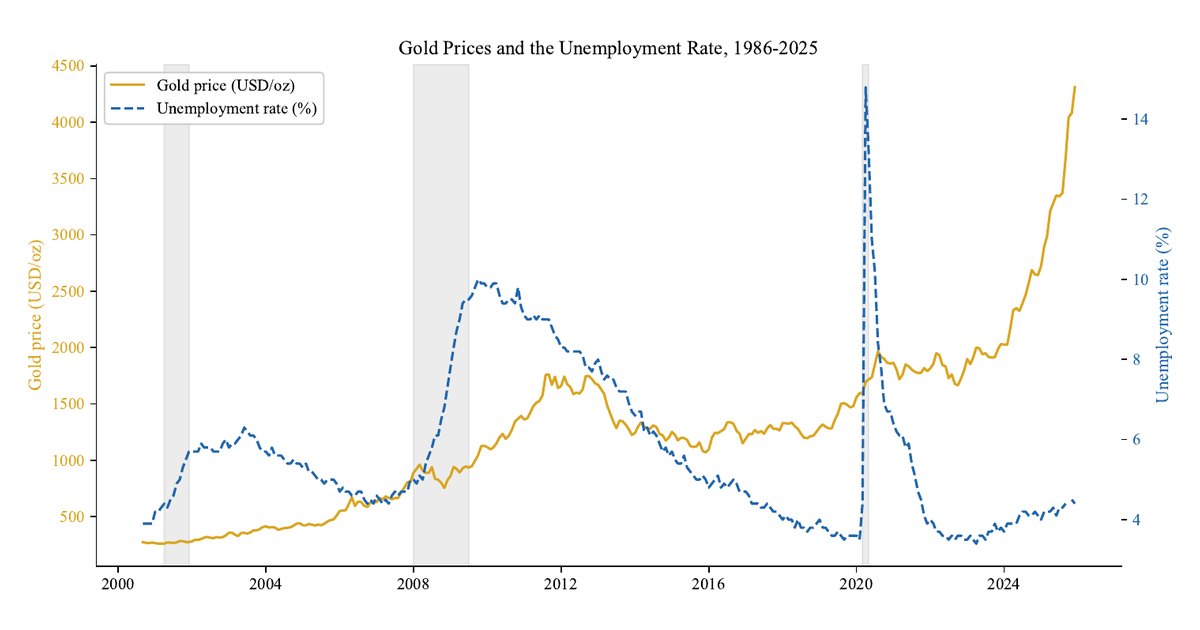
The Golden Canary: Asymmetric Gold Price Responses to Labor Market Shocks Across Monetary Regimes
Does gold respond symmetrically to good and bad labor market news? Local projections on monthly unemployment surprises from 2000 to 2025 reveal a pronounced asymmetry and a structural shift in the gold-unemployment relationship that coincides with the adoption of quantitative easing.
Latest writing
All posts
Assessing the $1.8 Trillion Federal Deficit on the U.S. Dollar’s Reserve Currency Status
Explores the implications of the $1.8 trillion federal budget deficit on the US Dollar's global reserve status.

Are Financial Conditions Actually Tight?
With stocks at near highs and spreads tight in high yield markets, we explore whether financial conditions are truly restrictive.

Previewing Fed Policy Impact on Financial Sector Performance
Previews the timing of interest rate cuts and their impact on net interest margins, credit demand, and financial sector fundamentals.
Projects
All projects
Predicting Next Month's Unemployment Rate
Sentiment and language features from FOMC meeting minutes predict the next month's unemployment rate through NLP-driven feature engineering
- Python
- Streamlit
- scikit-learn
- NLP

Economic Tracker Dashboard
Real-time county-level tracking reveals uneven economic recovery across U.S. metro areas post-pandemic
- Python
- Streamlit
- Pandas
- Plotly

Predicting Median Real Estate Prices in Select US Cities
SARIMA models with automatic parameter selection forecast median home prices across 7 U.S. metros, validated by walk-forward backtesting
- Python
- Streamlit
- statsmodels
- SARIMA

NFL Big Data Bowl
Tackle acceleration is the strongest predictor of successful NFL tackles, more important than closing speed
- Python
- scikit-learn
- Pandas
- Matplotlib

Real Estate Heatmap Dashboard
Interactive dashboard analyzing 1,262 neighborhoods across 7 U.S. metros with heatmaps, rankings, and market velocity analysis
- Python
- Pandas
- Streamlit
- Plotly

Student Dropout Prediction
CatBoost model predicts student dropout with 89% accuracy, identifying marital status and nationality as strongest risk factors
- Python
- CatBoost
- SMOTE
- scikit-learn