Previewing Fed Policy Impact on Financial Sector Performance

Photo by Maxim Hopman on Unsplash
Following a strong-than-expected Q2 GDP growth reading with inflation prints meeting expectations, Treasury yields declined and equity markets continue to carve out new highs in anticipation of increasing investor expectations that monetary easing is about to start. However, taking a deeper look into some financial sector fundamentals, it appears a broader correction in all financials could be on the table. In this article, we preview what last week’s economic numbers imply for this week’s Federal Reserve policy meeting, the timing of interest rate cuts, and their impact on net interest margins, expected credit demand, and banking sector relative performance.
Expectations for Federal Reserve Interest Rate Policy
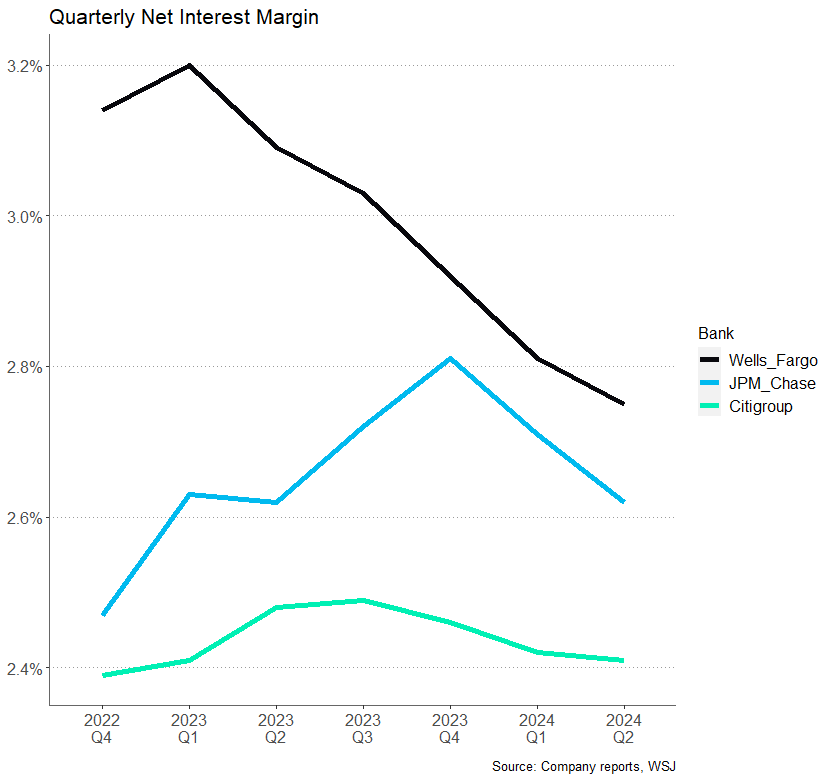
The timing of a Fed rate cut continues to weigh heavily on net interest margins (NIM) for banking stocks. NIM, a measure of profitability, represents the difference between the interest income generated by banks and the amount of interest paid out to their depositors. As rate cuts loom, banks are caught in a delicate balance between falling interest earnings on floating-rate loans tied to benchmark rates and depositors who will still be looking for a good return on their cash. Cracks are emerging: Huntington Bancshares sold off on news of lower year-end guidance for net interest income. Similarly, among the larger banks we’re seeing a drop off in net interest margins.
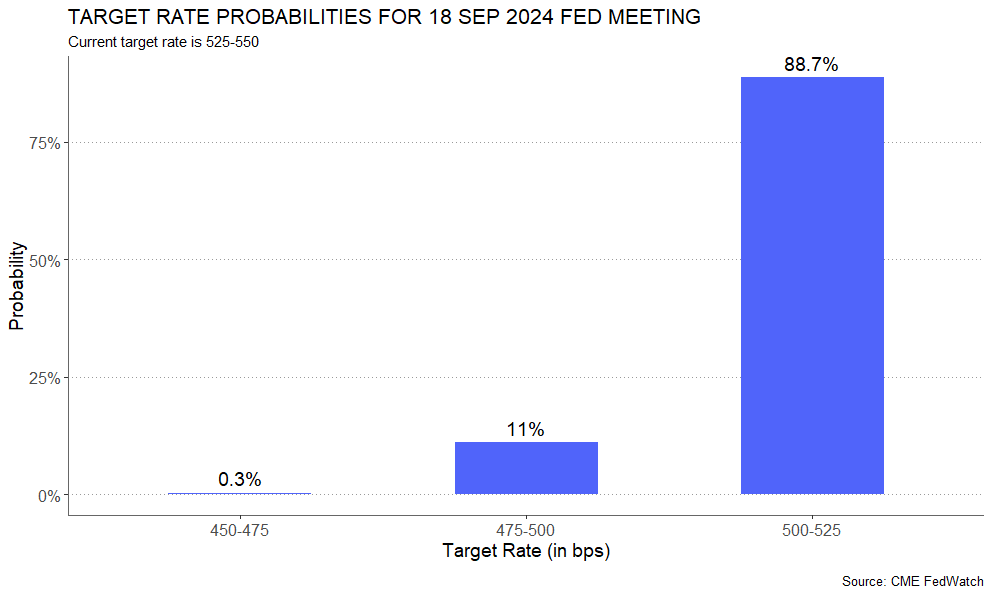
According to the CME FedWatch Tool, market-implied odds of a Fed rate cut in September are increasingly high. This anticipation pressures banks, as lower rates directly reduce the yield on their interest-earning assets, while competitive pressures prevent a corresponding immediate drop in deposit rates.
Muted Loan Growth Exacerbating Margins
Loan growth, a significant driver of banking profitability, remains muted, further complicating the NIM scenario. In a higher rate environment, banks typically benefit from increased lending rates. However, with the anticipated rate cut, the already tepid loan growth might not pick up pace swiftly enough to offset the declining margins.
Big corporate borrowers are acting cautiously, and that’s showing up in the declining demand for credit across commercial and industrial (C&I) loans. Without growing loan books, banks will continue to get squeezed on NIM.
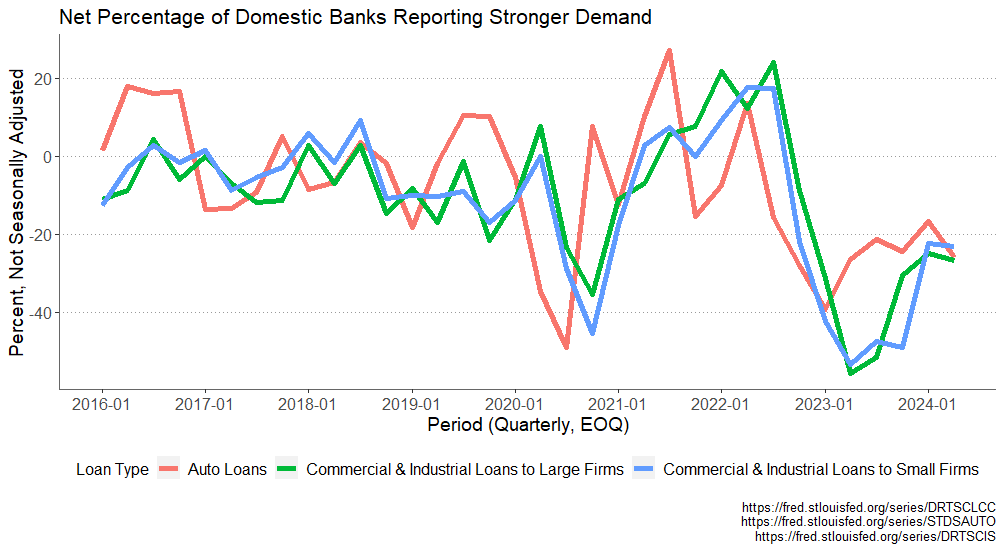
Falling demand for credit impacts more than just NIM, as stagnating C&I borrowing forebodes lower capex spend. For context, in Q2 business investment accounted for 23% of real GDP growth.
Rising Credit Costs
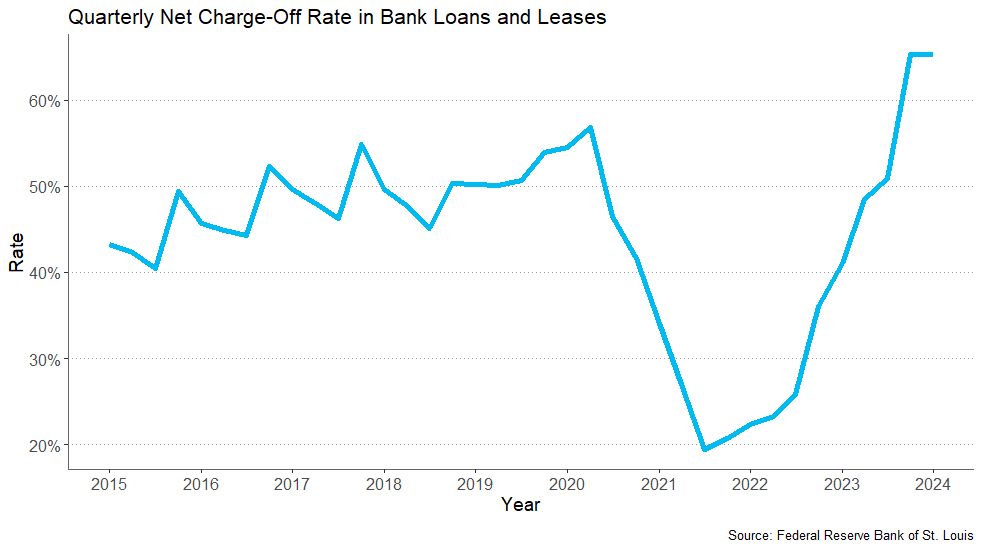
Compounding these challenges are normalizing credit costs (i.e. rising). Data from the first quarter of 2024 shows that the distress rate for commercial real estate collateralized loan obligations has hit a record 9.7%. This rise in credit costs is mirrored in the increasing net charge-offs for various types of bank loans and leases. Loans charged off as non-collectible had plunged to 0.19% of the total during the stimulus-fueled days of 2021 (relative to a 0.48% five year average before the pandemic). Today, that number stands at 0.65% of the total, and rising.
Conclusion
These factors - shrinking net interest margins, muted loan growth, and rising credit costs - explain the underperformance of the KBW Nasdaq Bank Index compared to the S&P 500 Index this year.
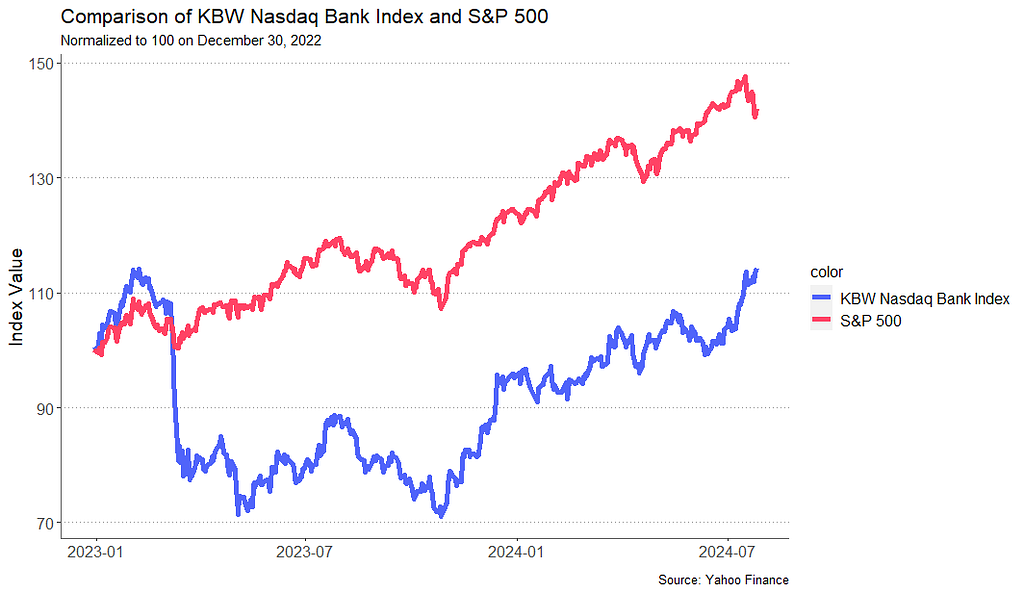
Other factors working in favor of the sector include a return to Wall Street dealmaking, which would add fee income to banking profitability, and regulators revisiting their plans to increase banks’ capital requirements.