YouTube Statistics Analysis

Problem Statement
What separates the world's top YouTube channels from the rest? Using a Kaggle dataset of 995 top global YouTube channels, this analysis identifies the features, categories, and geographic patterns most strongly associated with subscriber growth and estimated earnings.
Methodology
Data Preprocessing
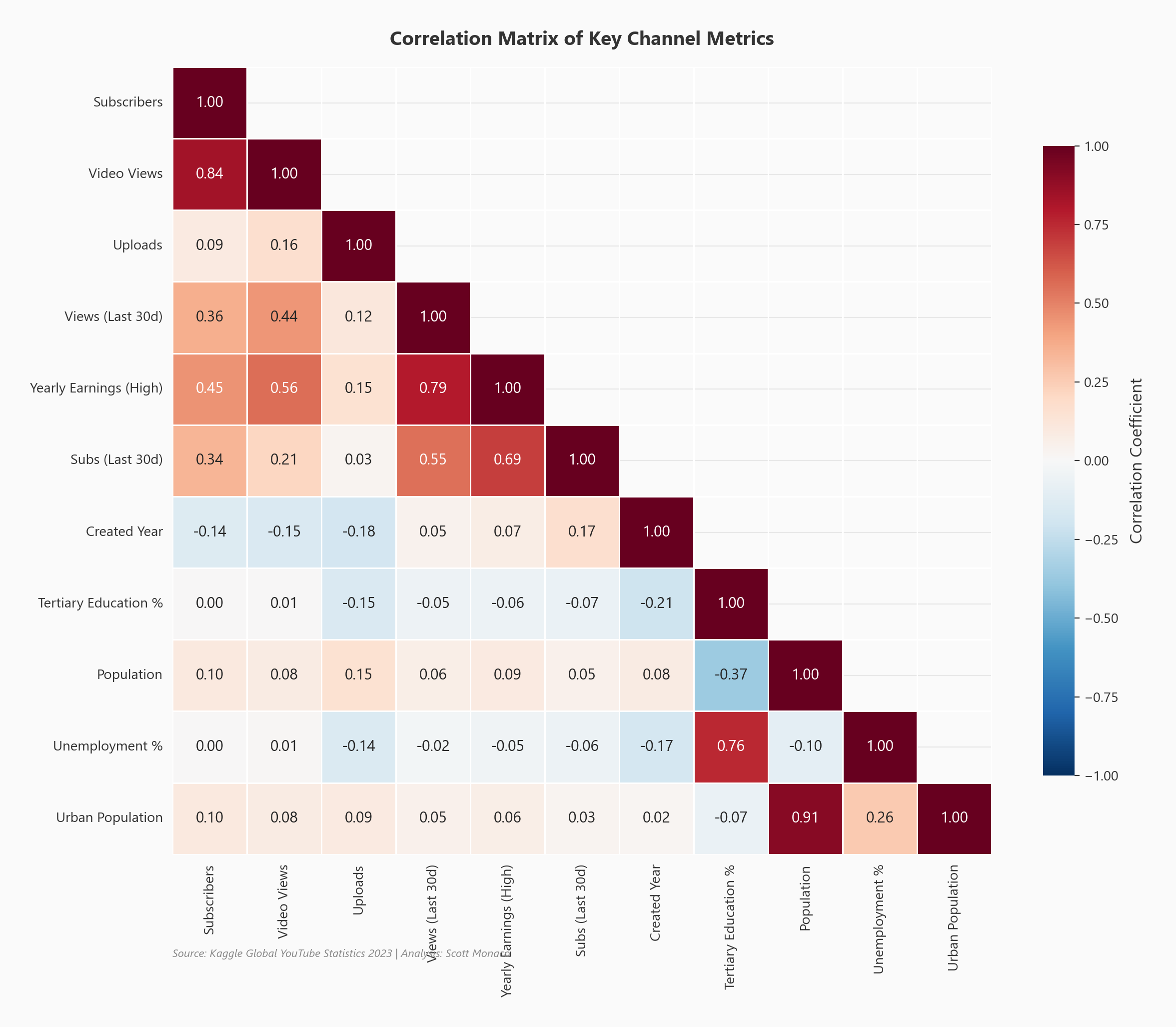
The dataset from Kaggle was relatively clean, requiring minimal handling of missing values and outliers. Basic statistics were computed including averages, standard deviations, and correlation matrices.
Results
Feature Importance
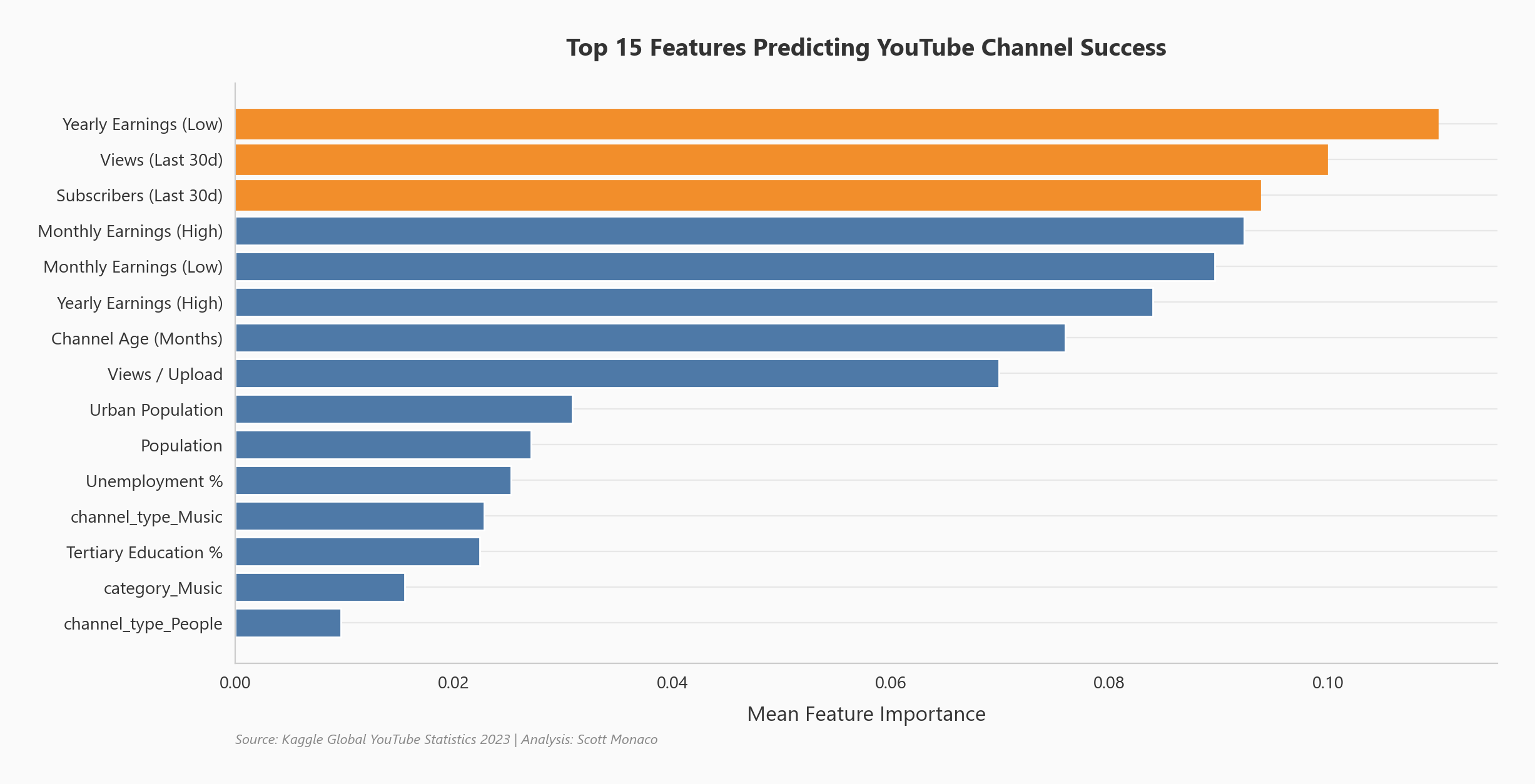
A Random Forest Classifier was used to model the features associated with YouTube success (defined as a Top 50 rank).
Content Categories
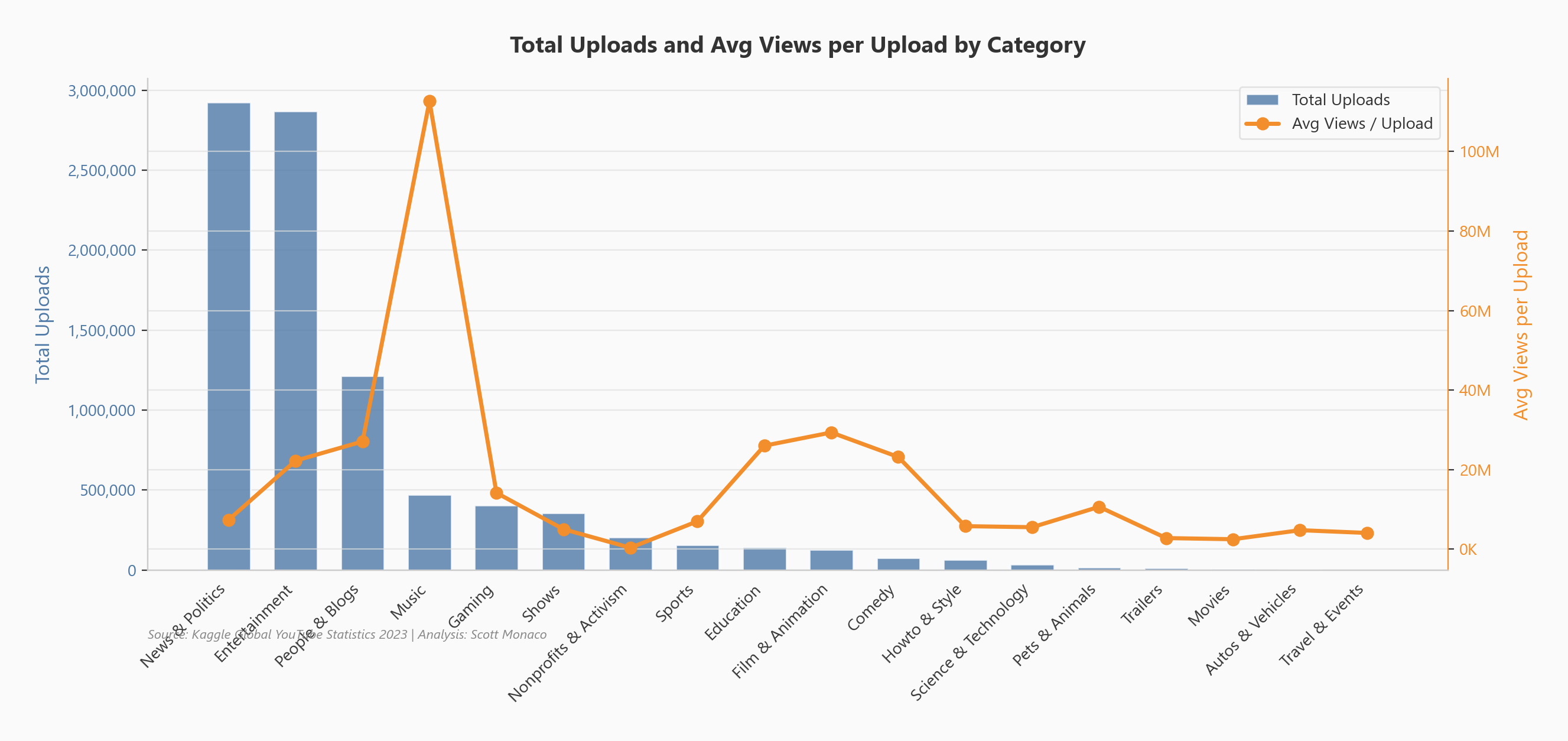
Music channels on YouTube generate disproportionately more views per upload compared to other categories. This makes sense as consumers rewatch music videos far more than time-sensitive content like News & Politics.
Regional Influencers
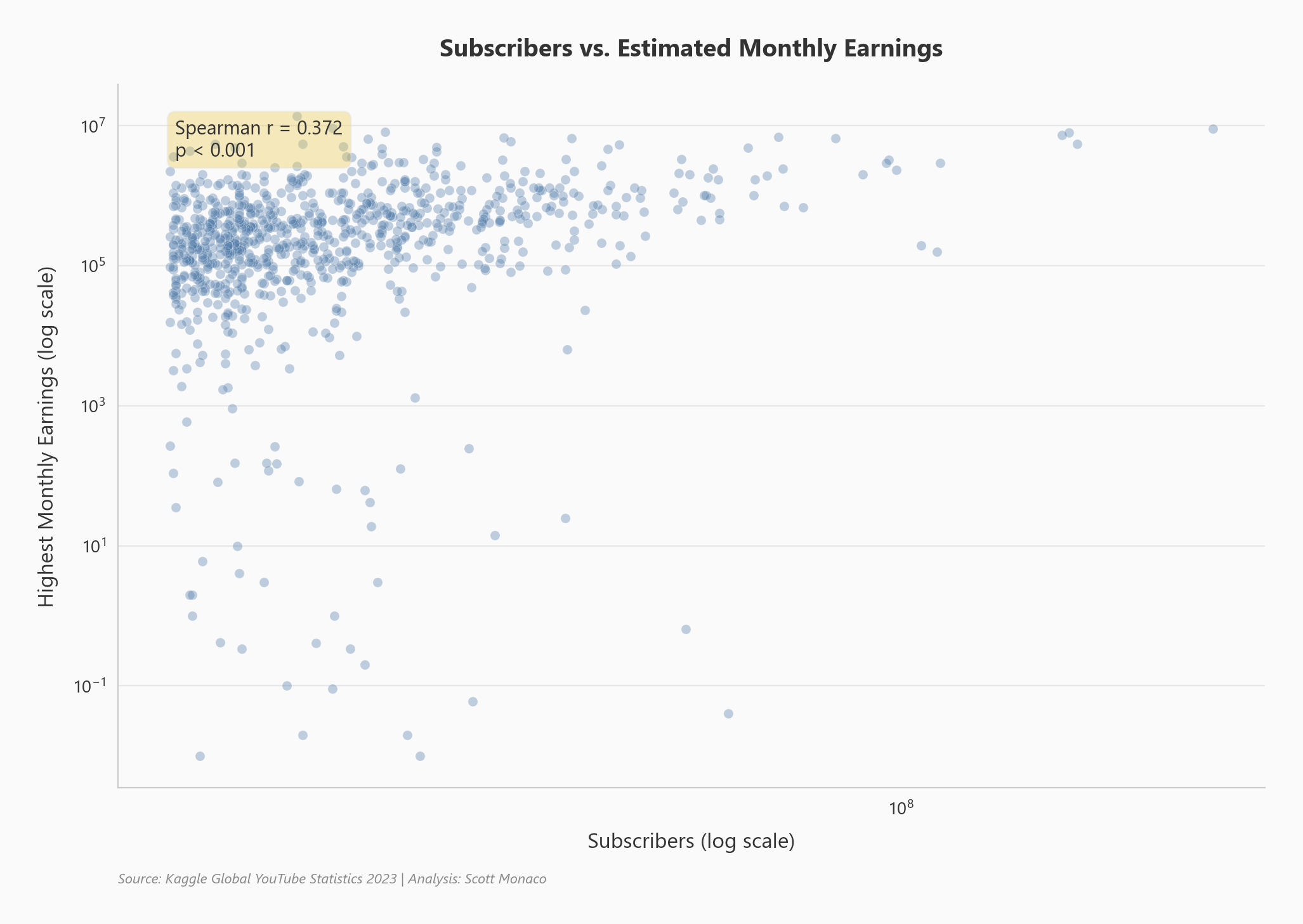
Subscribers & Earnings
There is a statistically significant association between subscriber count and monthly earnings, suggesting aspiring creators should prioritize subscriber growth.
Next Steps
- Examine historical YouTube statistics to identify trends in consumer taste over time
- Compare YouTube statistics with other platforms to understand broader digital media success factors
- Apply more sophisticated class imbalance techniques (SMOTE, ensemble methods) for improved modeling